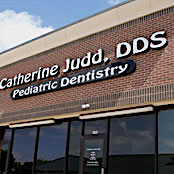



3713 W. 15th St.,
Suite 404,
Plano, Texas 75075
972-596-5203

Dr. Judd offers the best pediatric dental services - teeth whitening, white fillings for cavities, and root canals are just a few of the services this children's dentist offers


Frequently Asked Questions

Click on the link below to read more

Pain after root canal, Frequently Asked Dental Questions, and how to find a good children's dentistWHAT IS A PEDIATRIC DENTIST?

A pediatric dentist has completed at least four years of dental school and an additional two years of residency training in dentistry for infants, children, teens, and children with special needs. Children are not just small adults. They are not always able to be patient and cooperative during a dental exam. Pediatric dentists are trained to examine and treat children in ways that make them comfortable.
More Info on Dr. Judd, Pediatric Dentist

back to top


AT WHAT AGE SHOULD MY CHILD SEE THE DENTIST?

In order to prevent dental problems, your child should see a pediatric dentist no later than his/her first birthday.
More on the "First Dentist Visit"

back to top


WHAT HAPPENS IN A DENTAL CHECK-UP?

Dr. Judd will review your child’s medical and dental history. She will gently examine your child’s teeth and oral tissues. If your child is three or older their teeth will be cleaned and polished. Older children will be instructed in proper brushing and oral hygiene. The hygienist will spend some time explaining procedures ahead of time so the child feels comfortable. We strive to make each visit a fun, happy time so that the children look forward to future visits.
More Info...

back to top


Pain after root canal, Frequently Asked Dental Questions, and how to find a good children's dentistWILL X-RAYS BE TAKEN AT EVERY APPOINTMENT?

Dr. Judd will recommend radiographs only when necessary to protect your child's dental health. Radiographs may be needed to diagnose tooth decay, dental abnormalities, or for orthodontic treatment. A dental assistant will inform you of recommended radiographs before they are taken. Dr. Judd is careful to limit the amount of radiation to which children are exposed. Lead aprons and high-speed film are used to ensure safety.

back to top


WHY ARE THE PRIMARY "BABY TEETH" SO IMPORTANT?

Primary teeth are important for many reasons. They help children speak clearly and chew naturally. They also aid in forming a path and holding a space that permanent teeth can follow when they are ready to erupt. It is important to maintain the health of primary teeth to avoid problems with developing permanent teeth.

back to top


WHAT IS THE BEST WAY TO CARE FOR MY TEETH?

Pain after root canal, Frequently Asked Dental Questions, and how to find a good children's dentistBegin daily cleaning as soon as the first tooth erupts. Use a washcloth or soft bristled brush and water until the child is about two years of age. After that use a pea size amount of fluoride toothpaste on a soft brush but do not allow your child to swallow the toothpaste. Excess amounts of ingested fluoride can cause staining on developing permanent teeth. Children should brush at least twice a day. Supervise your child's brushing for best results.

Nutrition is very important to developing teeth. Make sure your child has a balanced diet and limit the frequency of sugar between meals. Limiting the frequency of sugars will help prevent tooth decay.

The American Academy of Pediatric Dentistry recommends a preventive dental check-up every six months.

back to top


WHAT IS BABY BOTTLE TOOTH DECAY?

Baby bottle tooth decay is caused by prolonged contact with almost any liquid other than water. Putting your child in bed with a bottle of formula, milk, juice, or any sweetened drinks will cause this condition. When liquid from a baby bottle builds up in the mouth, the sugars in the liquid mix with bacteria that produce acid that attack tooth enamel. If you must give your child a bottle in bed it should contain only water.

back to top


HOW DO DENTAL SEALANTS WORK?

Sealants are clear protective plastic coatings applied to the chewing surface (pits and fissures) of the back teeth to help keep them cavity-free. The sealant application is painless and can be completed in one visit. Sealants should be applied to permanent molars as they erupt to prevent decay. Sealants that are properly applied and maintained help protect the chewing surfaces of your child's teeth. The American Dental Association recognizes that sealants play an important role in the prevention of tooth decay.

back to top


THUMB SUCKING AND PACIFIER HABITS

Pain after root canal, Frequently Asked Dental Questions, and how to find a good children's dentistThumb and pacifier sucking habits will generally only become a problem if they go on for a long period of time. Most children stop these habits on their own. However, Dr. Judd will be happy to discuss any concerns that you might have. There are treatment options if your older child needs assistance in ending his/her thumb sucking habit.

back to top


GRINDING THE TEETH AT NIGHT

Parents are usually very concerned when their children grind their teeth in their sleep (bruxism). Most cases of pediatric bruxism do not require dental intervention.

back to top


WHAT SHOULD I DO IF MY CHILD FALLS AND KNOCKS OUT A PERMANENT TOOTH?

The most important thing is to remain calm and find the tooth. Hold it by the crown rather than the root. Put the tooth in a glass of milk if available; otherwise keep the tooth moist in water. Immediately take your child and the tooth to the dentist. Time is critical in saving the tooth.

back to top

Dr. Judd is a board certified pediatric dentist in Plano, TX.
Website Design & Search Marketing by TNT Dental